
 English
Views: 0 Author: Site Editor Publish Time: 2025-12-16 Origin: Site


From the protective packaging around your new electronics to the insulation keeping your home warm, foam is everywhere. However, not all foam is created equal. While many people are familiar with the soft, open-cell polyurethane foam found in standard sponges, there is another category that plays a critical role in industrial applications: extruded foam.
This material is a powerhouse of engineering, known for its durability, moisture resistance, and versatility. Understanding how it is produced—and the machinery required to do so—is essential for manufacturers in industries ranging from construction to bedding. This guide explores the science behind extruded foam, the critical role of the foam extruder, and why this technology remains a cornerstone of modern manufacturing.
Extruded foam is a plastic material that has been melted and formed into a continuous shape. Unlike expanded foam, which is created by placing beads in a mold and expanding them with steam, extruded foam is a continuous process. It results in a material with a closed-cell structure, meaning the gas bubbles within the foam are sealed off from one another.
This closed-cell nature gives extruded foam its distinct advantages. It is incredibly resistant to water absorption, has a higher compressive strength, and offers superior thermal insulation properties compared to open-cell alternatives. The texture is usually smoother, and the density is more consistent throughout the product.
Manufacturers use various thermoplastics to create extruded foam, depending on the desired application. The most common types include:
· Extruded Polystyrene (XPS): Widely used in construction for insulation boards due to its high R-value and stiffness.
· Polyethylene (PE) Foam: Known for its resilience and ability to absorb shock, making it ideal for packaging and cushioning.
· Polypropylene (PP) Foam: Offers high heat resistance and structural integrity, often found in automotive parts.
The magic happens inside a specialized piece of machinery known as a foam extruder. This machine transforms raw plastic pellets into the finished foam sheets, planks, or profiles we see in the market. The process is a delicate balance of heat, pressure, and chemistry.
The process begins in the hopper, where raw plastic resin (usually in pellet form) is fed into the extruder barrel. A rotating screw inside the barrel pushes the plastic forward. As the plastic moves, it is subjected to intense friction and external heaters, causing it to melt into a viscous liquid.
Once the plastic is molten, a "blowing agent" is injected into the barrel under high pressure. This agent can be a physical gas (like CO2 or nitrogen) or a chemical compound. The screw mixes the blowing agent thoroughly with the molten plastic, creating a pressurized solution. At this stage, the plastic wants to expand, but the high pressure inside the foam extruder keeps it contained.
The pressurized mixture is pushed through a specifically shaped die at the end of the extruder. This is the moment of transformation. As the material exits the high-pressure environment of the extruder and enters the lower pressure of the ambient air, the blowing agent expands instantly.
The plastic expands into foam, taking the shape of the die—whether that is a flat sheet, a thick board, or a complex profile.
The newly formed foam is hot and soft. It must be cooled immediately to maintain its shape. It passes through sizing equipment and cooling baths or fans. Once rigid, the continuous line of foam is cut to the desired length.
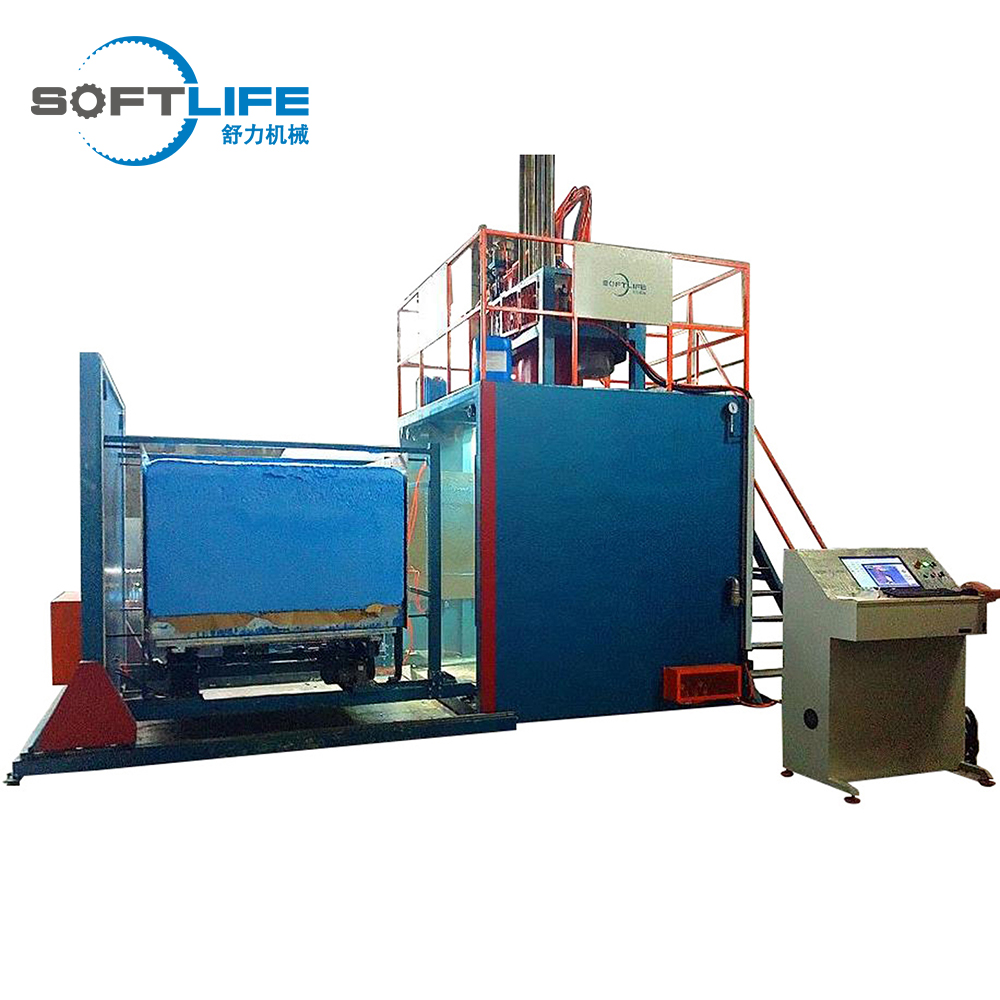
A common source of confusion in the industry is the difference between Extruded Polystyrene (XPS) and Expanded Polystyrene (EPS). While they are chemically similar, their manufacturing processes and final properties are distinct.
Feature | Extruded Foam (XPS) | Expanded Foam (EPS) |
Manufacturing Method | Continuous extrusion through a die using a foam extruder. | Steam expansion of beads inside a mold. |
Cell Structure | Closed-cell, tightly packed, no voids. | Open-cell structure between fused beads. |
Water Resistance | High resistance; does not absorb water easily. | Moderate; water can seep between beads. |
Compressive Strength | Higher; better for load-bearing applications. | Lower; prone to denting under heavy loads. |
Insulation Value | Higher R-value per inch (typically R-5). | Slightly lower R-value per inch (typically R-4). |
Surface Finish | Smooth, continuous skin. | Textured appearance (looks like fused beads). |
The versatility of extruded foam allows it to be used across a vast array of sectors.
In the mattress industry, companies like Softlife Mattress Machinery understand the importance of high-quality foam components. Extruded PE foam profiles are often used for edge support in hybrid mattresses, providing a firm seating edge that doesn't collapse. Additionally, thin sheets of extruded foam are essential for packaging mattresses to prevent damage during shipping.
XPS is the gold standard for rigid insulation. It is used in foundations, basements, and under concrete slabs because it does not degrade when exposed to moisture. Its ability to withstand high pressure makes it suitable for insulating under roads and rail tracks as well.
If you have ever received a package wrapped in a thin, white, spongy sheet, you have handled extruded PE foam. It provides excellent scratch resistance and shock absorption for delicate items like glass, electronics, and automotive parts.
Producing consistent, high-quality foam requires precise machinery. The foam extruder must maintain exact temperatures and pressures; a fluctuation of even a few degrees can result in foam that has large voids, poor surface finish, or inconsistent density.
Advanced machinery providers, such as Softlife Mattress Machinery, recognize that the efficiency of the production line directly impacts the profitability of the manufacturer. Modern extruders are designed for energy efficiency and material optimization, ensuring that scrap is minimized and the cellular structure of the foam is uniform.
When selecting machinery, manufacturers look for:
· Screw Design: Optimized for specific polymers to ensure homogeneous mixing.
· Temperature Control: Multi-zone heating and cooling for precision.
· Die Technology: Custom dies that allow for quick changeovers between different product shapes.
As industries push for more sustainable and efficient materials, extruded foam continues to evolve. Recent advancements focus on using eco-friendly blowing agents that have zero ozone depletion potential. Furthermore, the ability to incorporate recycled plastic content into the extrusion process is becoming a standard requirement for many manufacturers aiming to reduce their carbon footprint.
The technology is also adapting to create hybrid materials—foams that are co-extruded with other polymers to create composite structures with enhanced strength or barrier properties.
Extruded foam is more than just a byproduct of plastic; it is a vital material that supports infrastructure, protects goods, and enhances comfort in our daily lives. From the walls of our homes to the mattresses we sleep on, the quality of this foam depends entirely on the precision of the manufacturing process.
Investing in the right technology, specifically a high-quality foam extruder, is the deciding factor between producing a mediocre product and a market-leading material. For those in the bedding and machinery sector, companies like Softlife Mattress Machinery offer the expertise and equipment necessary to navigate this complex but rewarding manufacturing landscape.