
 English
Views: 0 Author: Site Editor Publish Time: 2026-01-06 Origin: Site


The mattress industry is fiercely competitive. When a customer walks into a showroom or browses online, the first thing they notice isn't the spring count or the density of the support foam—it’s the look and feel of the mattress surface. That plush, textured, and patterned top layer is the result of high-quality quilting.
Achieving that perfect finish requires more than just standard equipment; it demands the ultimate mattress quilting machine. But for manufacturers, selecting the right machinery can be a complex puzzle. How do you balance speed with precision? What is the difference between single-needle and multi-needle systems?
In this Q&A guide, we break down everything you need to know about selecting the right machinery to elevate your production line, improve product durability, and create the aesthetic appeal that drives sales.
A mattress quilting machine is a specialized piece of industrial equipment designed to stitch together multiple layers of material—usually the top fabric (ticking), a layer of foam or batting, and a backing material. This process creates the "quilt" that sits on top of the mattress.
However, its role goes beyond simple aesthetics. While the pattern draws the eye, the quilting process serves a vital structural purpose. It secures the internal comfort layers, preventing them from shifting or bunching up over time. Without a high-quality fabric quilting machine, a mattress would quickly lose its shape and comfort profile.
In a modern production facility, these machines are the heartbeat of the finishing line. They determine the production speed and the visual quality of the final product.
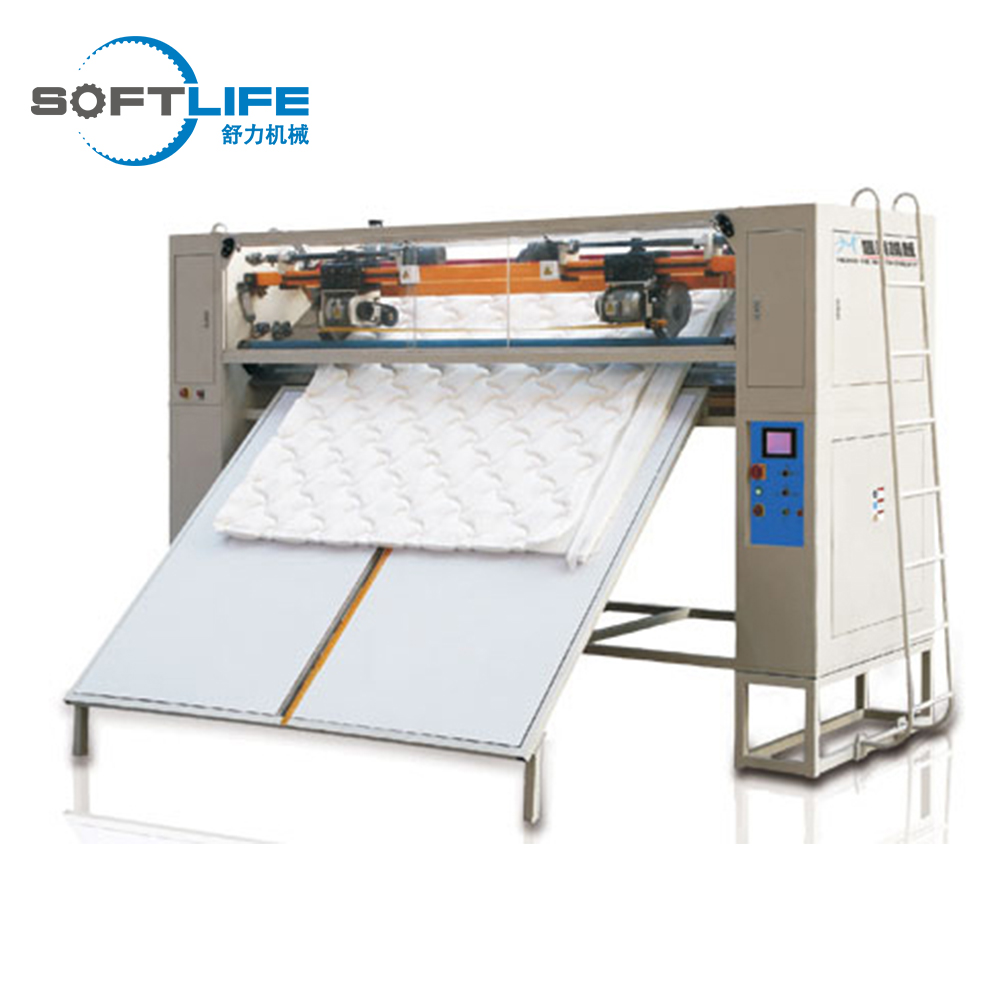
One of the most common questions manufacturers ask is regarding the difference between single-needle and multi-needle systems. Both are types of sewing machine setups, but they serve different functions in the production line.
Computerized Multi-Needle Quilting Machines are built for speed and volume. They use a row of needles to stitch the entire width of the fabric simultaneously. This makes them ideal for simple, continuous geometric patterns (like diamonds or waves) and high-speed production runs.
Industrial Single-Needle Quilting Machines, on the other hand, offer artistic freedom. Because they use a single head that moves across the fabric (or moves the fabric under the head), they can create intricate, complex patterns, logos, and discontinuous designs ("tack and jump") that multi-needle machines cannot replicate.
Here is a quick comparison to help you decide:
Feature | Single-Needle Machine | Multi-Needle Machine |
Primary Advantage | Design flexibility and intricate patterns | High-speed production and efficiency |
Pattern Capability | Complex shapes, logos, tack & jump | Continuous geometric patterns, straight lines |
Production Speed | Slower, focused on high-end detail | Very fast, focused on volume |
Best Application | Luxury mattresses, custom designs | Mid-range mattresses, border quilting |
Maintenance | Lower complexity regarding needle alignment | Requires precise synchronization of many needles |
Gone are the days of mechanical cam-driven machines that required hours to change patterns. The "ultimate" machine today is invariably computerized.
Computer Numerical Control (CNC) technology allows operators to upload designs digitally. A computerized mattress quilting machine can switch from a simple wave pattern to a complex floral design in seconds. This flexibility is crucial for manufacturers who produce various mattress lines—from budget-friendly options to ultra-luxury models—on the same factory floor.
Furthermore, computerized systems offer precision that manual operation cannot match. They ensure consistent stitch length and pattern symmetry, which minimizes material waste and ensures every mattress looks identical to the showroom model.
When scouting for the best equipment, you should look beyond just the price tag. The total value of a fabric quilting machine lies in its features and build quality.
1. Automatic Thread Trimming: This feature cuts the thread automatically when a pattern is finished or when the machine jumps to a new location. This saves significant manual labor in post-processing.
2. Thickness Capacity: Mattresses are getting thicker. Ensure the machine can handle heavy-duty materials and thick layers of high-density foam without skipping stitches or breaking needles.
3. Pattern Library: A robust onboard computer should come with a pre-loaded library of patterns, along with the ability to design and upload your own.
4. Safety Sensors: The machine should automatically stop if a thread breaks or if the material runs out, preventing damage to the fabric and the machine itself.
An industrial sewing machine used for quilting is subjected to immense stress. It punches through thick layers of foam and fabric thousands of times per minute. To ensure your "ultimate" machine stays in top condition, a rigorous maintenance schedule is non-negotiable.
· Lubrication: Most modern machines have automatic oiling systems, but operators must check oil levels daily. Proper lubrication prevents friction-related overheating.
· Needle Care: Needles should be changed regularly, not just when they break. A dull needle creates messy holes in the fabric and can damage the internal foam.
· Cleaning: Lint and dust from fabric and batting can accumulate in the bobbin area and motor. Compressed air should be used daily to clear this debris to prevent fire hazards and mechanical jams.
Finding a supplier that balances advanced technology with reliable support is often the hardest part of the procurement process. You need a partner that understands the nuances of foam machinery, cutting systems, and the final assembly.
SOFTLIFE MATTRESS MACHINERY CO.,LIMITED stands out as a professional manufacturer dedicated to this niche. Located in Taishan City, Guangdong Province, they specialize in a wide range of equipment, from foaming machines to the final packing stage.
Softlife doesn't just sell machines; they focus on comprehensive solutions. Their technical team is dedicated to improving industrial machines to ensure they are in the best working status before shipping. Whether you need a computerized multi-needle quilting machine or a tape edge machine to finish the borders, they offer equipment that has been strictly tested.
With a philosophy of "No the Best, Only Better," they export globally to Southeast Asia, the Middle East, Europe, South America, and Africa.
To explore their full range of products, including mattress conveyors and pocket spring machines, you can visit their website here: https://www.softlife88.com/.
Technically, no. While a quilting machine is the star of the show regarding aesthetics, mattress production is a symphony of different equipment.
For example, once the quilt panel is finished, it must be cut to size. This requires precise cutting machinery. Then, the quilt is married to the spring unit and side panels using a Tape Edge machine (another specialized sewing machine). Finally, the mattress might need to be compressed and rolled for shipping, requiring a packing machine.
However, the "ultimate" quilting machine is the anchor. If the quilting is poor, the mattress looks cheap, regardless of how well the rest of the production line functions.
The future lies in automation and integration. We are seeing machines that not only quilt but also detect fabric flaws automatically using AI cameras. There is also a move toward sustainable manufacturing, with machines designed to use less energy and work effectively with eco-friendly, organic fabrics that can be more difficult to sew than synthetic materials.
Investing in a high-quality mattress quilting machine now ensures your business is ready for these trends. It allows you to adapt to changing consumer tastes, whether they want minimalist geometric designs or traditional, deep-buttoned looks.
Choosing the ultimate machine is about understanding your specific production needs. Do you need high volume? Go for multi-needle. Do you need bespoke luxury? Go for single-needle.
Regardless of your choice, ensuring you have a partner like Softlife can make the difference between a smooth operation and constant downtime. By prioritizing quality equipment, you ensure that the first thing your customer sees—that beautiful, durable quilt—is a promise of quality that the rest of the mattress keeps.