
 English
Views: 0 Author: Site Editor Publish Time: 2026-03-23 Origin: Site


People sleep on mattresses every night, expecting lasting comfort and targeted back support. The secret to this high-quality rest often lies hidden inside the bed itself: pocket springs. As consumer demand for premium mattresses grows, factories must find smarter ways to scale up their operations. Finding the right machinery is a crucial step for any production line hoping to stay competitive.
To meet these production goals without sacrificing quality, manufacturers need reliable and fast equipment. A China Pocket Spring Machine offers an excellent balance of advanced technology, high output, and cost efficiency. These machines automate the complex process of turning raw steel wire and non-woven fabric into individual, encased coils.
Upgrading your factory floor with the right equipment can drastically reduce labor costs and minimize material waste. This guide will walk you through how these machines work, what features to look for, and how to choose the right manufacturing partner for your business needs.
The mattress industry has seen a massive shift away from traditional open-coil innersprings. Open coils are wired together, meaning movement on one side of the bed transfers directly to the other. Pocket springs solve this problem entirely. Because each steel coil sits inside its own fabric pocket, the springs move independently. This targeted support provides better spinal alignment and completely eliminates motion transfer.
Producing these individual coils by hand is impossible at a commercial scale. Factories rely heavily on a Pocket Spring Machine to automate the workflow. The machinery pulls high-carbon steel wire from a spool, heats it to relieve stress, shapes it into a tight coil, and then compresses it into a sleeve of non-woven fabric. Finally, the machine uses ultrasonic welding to seal the fabric, creating a continuous string of pocketed springs.
Because the entire process happens in seconds, modern facilities can produce hundreds of springs per minute. This level of automation ensures every single coil meets strict quality standards.
Sourcing heavy industrial equipment requires careful planning and a solid budget. Many factory owners look overseas to find machinery that fits their financial and operational goals. Choosing a machine engineered in China provides several distinct advantages for growing businesses.
First, the cost-to-performance ratio is highly favorable. Chinese engineering has advanced rapidly over the last two decades, bringing state-of-the-art automation to the global market at a fraction of the cost of European alternatives. You get access to touch-screen controls, computerized fault detection, and ultrasonic welding without overextending your capital.
Second, the supply chain for spare parts is incredibly robust. A reputable Pocket Spring Machine Manufacturer will usually keep a large inventory of replacement components. If a part wears out, you can often get a replacement shipped quickly, reducing costly downtime on your factory floor.
Not all machines offer the same level of performance. When comparing different models, you need to match the machine's capabilities with your daily production targets. Pay close attention to the operating speed, wire gauge compatibility, and the type of welding used.
Below is a breakdown of the differences between standard and high-speed automatic machines.
Feature | Standard Pocket Spring Machine | High-Speed Automatic Machine |
|---|---|---|
Production Speed | 60 - 80 springs per minute | 120 - 150+ springs per minute |
Operator Requirement | Requires frequent monitoring | Fully automated with fault detection |
Wire Gauge Range | 1.8mm to 2.2mm | 1.2mm to 2.4mm (High versatility) |
Fabric Sealing | Standard heat sealing | Advanced ultrasonic welding |
Best Suited For | Small to mid-sized factories | Large-scale, continuous production |
Upgrading to a high-speed, fully automated system makes sense if you distribute mattresses nationally or internationally. The initial investment is higher, but the labor savings and increased output quickly cover the difference.
Purchasing industrial equipment is a long-term relationship. The company you buy from needs to support you long after the machine arrives at your loading dock.
Start by looking for a supplier with a proven track record in the mattress machinery sector. Check if they have their own research and development team. Companies that invest in R&D are more likely to offer machines that feature the latest safety sensors and software upgrades.
You also need a supplier that provides excellent technical support. The setup process for a Pocket Spring Machine involves precise calibration. Look for partners like Softlife Mattress Machinery Co., Limited, who export globally and understand the technical requirements of different regional markets. Ensure your chosen supplier offers detailed digital manuals, video tutorials, or even on-site training for your staff.
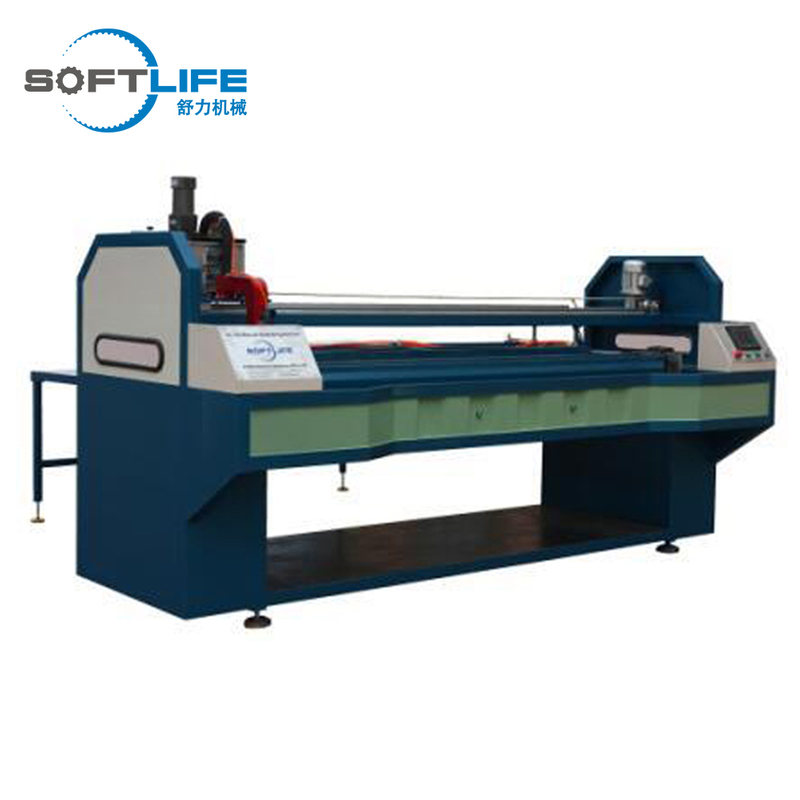
A well-maintained machine will run efficiently for decades. Neglecting basic upkeep leads to jammed wires, torn fabric, and uneven coils. Implementing a strict maintenance schedule keeps your production line moving smoothly and protects your investment.
Assign specific maintenance tasks to your factory floor managers. Keeping a logbook near the machine ensures everyone stays accountable for the equipment's health.
Maintenance Task | Frequency | Action Required |
|---|---|---|
Machine Cleaning | Daily | Clear dust and fabric scraps from the welding area and conveyor belts. |
Lubrication | Weekly | Apply industrial oil to gears, chains, and moving mechanical joints. |
Sensor Calibration | Monthly | Test automated fault sensors and wire-feed monitors for accuracy. |
Ultrasonic Horn Check | Monthly | Inspect the welding horn for wear and tear; replace if sealing weakens. |
Full System Audit | Annually | Bring in a technician to inspect electrical panels and software updates. |
Yes. Most modern pocket spring machines allow you to adjust the coil diameter, height, and wire gauge. You simply input the new parameters into the computerized control panel and adjust the mechanical guides. This flexibility allows you to produce everything from plush pillow-top coils to firm support springs on the same machine.
Ultrasonic welding is actually highly energy-efficient. Instead of using constant thermal heat to melt the fabric together, it uses high-frequency acoustic vibrations to create rapid friction. This process instantly fuses the non-woven fabric together and draws very little power compared to traditional thermal heating elements.
A fully automatic machine generally requires only one operator. The computer system monitors the wire feed, spring height, and fabric alignment. The operator mainly oversees the process, loads new spools of wire, and changes the rolls of non-woven fabric when they run out.
Scaling your mattress production requires smart investments in dependable technology. Moving from manual assembly or outdated machinery to an advanced automated system protects your profit margins and guarantees a consistent product for your customers.
Take the time to assess your current production bottlenecks. Calculate how many springs you need per hour to meet your sales targets. Once you have those numbers, reach out to an experienced manufacturer to discuss which machine fits your floor plan and budget.
Upgrading your equipment is the surest path to growing your brand and delivering the comfort your customers expect.